
Does Reform Require One-Party Rule?
An uncomfortable lesson from the Progressive Era

In my last post, I argued that we’re in a Patchwork era — our response to new technologies and policy domains is incoherent, with no one’s interests being advanced. Stephen Skowronek’s Building a New American State helped me see this pattern.

But Skowronek also explains what triggered the shift out of Patchwork politics. And that’s where things get uncomfortable. It has me asking a question: will it take a period of one-party rule for us to improve American state capacity?
Let’s quickly recap Skowronek’s history. He argues that Progressive Era reformers spent decades failing to build new functions on top of a weak state — what he calls the “Patchwork” era, running roughly from 1877 to 1900. Then, from 1900-1920, deeper reforms broke through. He calls this period “Reconstitution” for the way it remade the American state.
The natural question is: why did reform efforts fail in one decade and then succeed in the next? After all, many of the problems they were confronting were the same in 1877 and 1904.
One-Party Rule and Reconstitution
A big part of the answer is that Republicans ran the table and consolidated control of the federal government from the 1890s-1910s. This wasn’t one party rule in an authoritarian sense, they just kept winning elections.
Woodrow Wilson, a Democrat, only won in 1912 because Roosevelt split his own party’s vote by running under the Progressive Party. Wilson himself was a longtime participant in the bipartisan Progressive movement, so the difference between him and Roosevelt or Taft was not as great as we might assume.
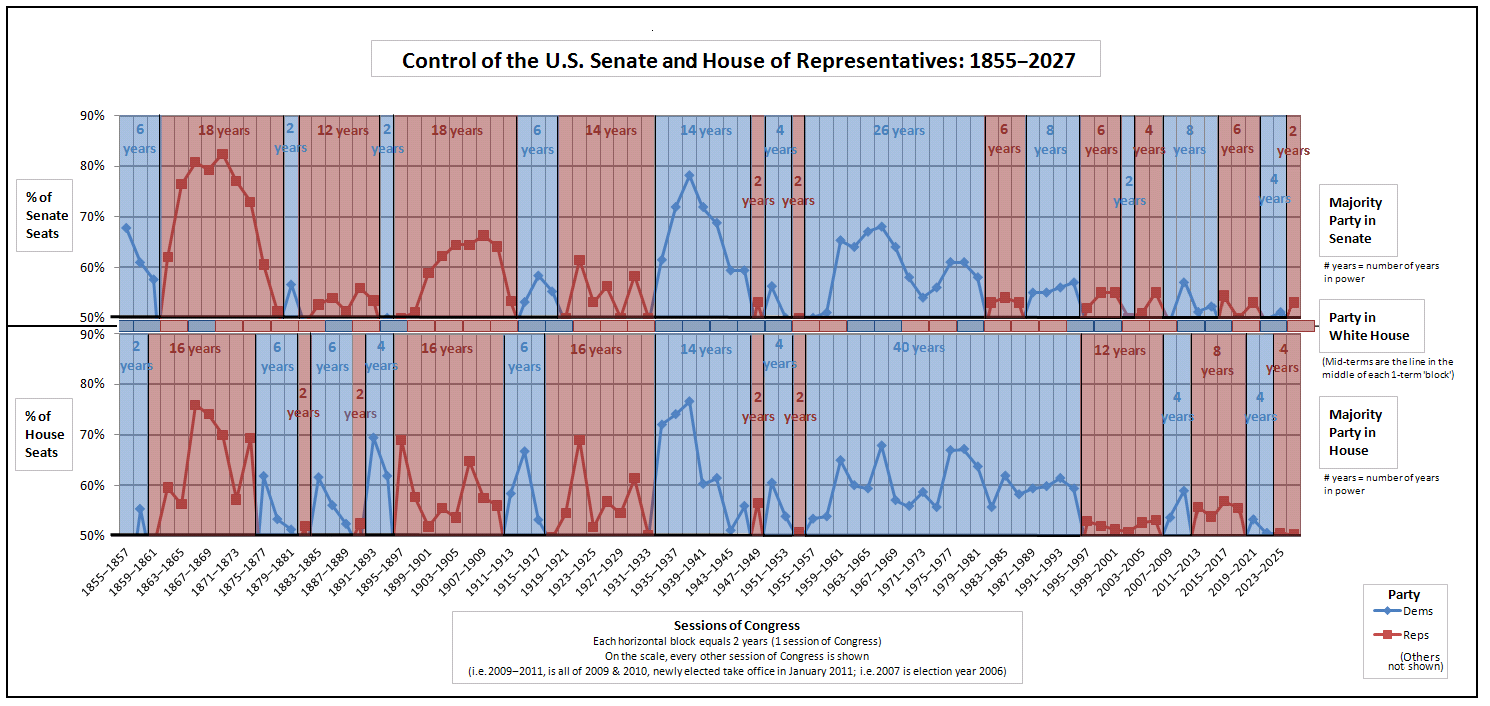
This changed the focus of political conflict. Rather than two parties fighting, it became different branches of government fighting with each other. Inter-party conflict is part of what limited reforms in the previous Patchwork era.
Once Republicans dominated the government, political conflicts started to look more like the kind of between-branch conflicts that were predicted in Federalist 51. Roosevelt asserts that the Executive Branch can do something previously done by the Courts or Congress. His successor Taft tries to stay the course but walks it back a bit. Then Congress wakes up and really fights for control.
Eventually, we end up with some imperfect compromise that essentially locks in and stays frozen for decades. This is what Skowronek calls Reconstitution, and it required one-party dominance to get there
This is how we got real reforms: expanded Executive Branch powers, the ICC regulating railroads (the first serious national business regulations), a nationalized Army. The bipartisan consensus in Congress emerged precisely because of one-party dominance. That environment turned down the temperature of inter-party conflict and shifted focus to structural questions about how the government should work.
We’re Far From That
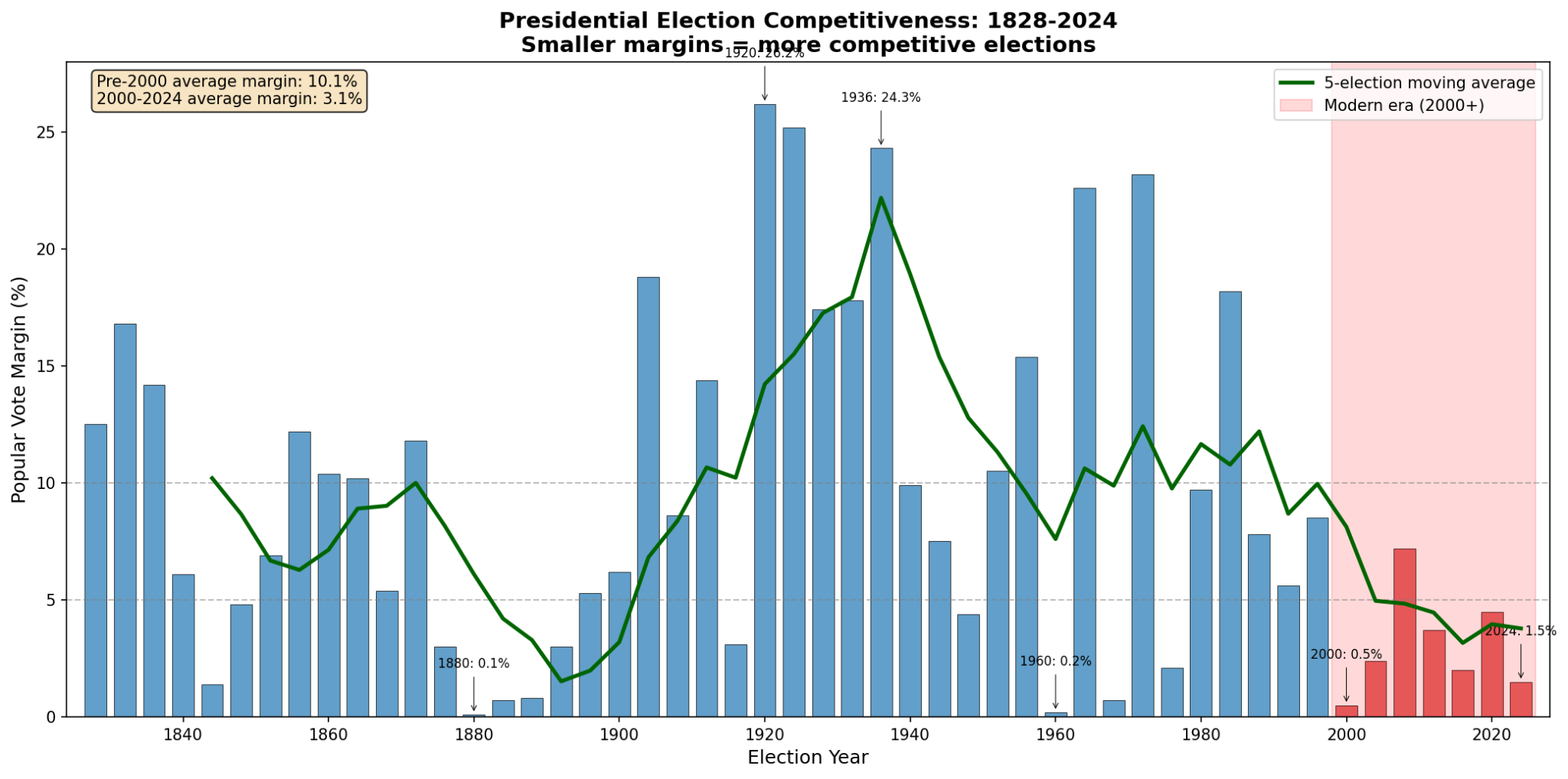
Today we’re in an era of highly competitive partisan politics, perhaps the most competitive in our country’s history. It’s rare for Presidential elections to be regularly this close and for control of both the Presidency and Congress to swing back and forth so frequently. We’re far from the 1890s era of Republican dominance.
Perhaps it’s no surprise, then, that our response to new challenges looks like a Patchwork. One conclusion many draw is that we’re in a new business-friendly, laissez-faire repeat of the Gilded Age.
But Skowronek’s model fits better. As I illustrated in the last post with our attempts to force the Chinese sale of TikTok, we’re not in an era where anyone’s interests are being coherently or consistently advanced. We’re in an era where intense partisan competition keeps the focus on winning the next election rather than on deeper structural questions about governance.
This makes me a bit pessimistic about the prospects of Neo-Progressive reforms. It seems like one-party rule — for at least a few elections in a row — may be what’s needed to turn down the temperature of inter-party conflict and shift focus towards inter-branch conflict and structural reforms. I don’t really see that on the horizon in our current political and media environment.
That said, there may be another path. In a recent conversation, quite perfectly timed for my current reading, Tyler Cowen and Francis Fukuyama debate US state capacity. All-in-all, they agree on most of the diagnosis and on many concrete solutions, but Cowen does offer an interesting reframe of the debate:
I have a simpler diagnosis. I think when your state has two-party competition for real, things tend to go pretty well. That’s Virginia. It’s many states in this country. It’s not California. Electoral competition works. We believe in democracy. And again, it doesn’t mean these other claims are wrong, but it encompasses a lot of them. The pure, more right-wing states, they have their own problems. Mississippi, Louisiana, we could go into that, but they also don’t have two-party competition.
In other words, the problem isn’t partisanship itself but the lack of real competition in one-party states. Perhaps federalism can help us out of this bind. If California continues to be in shambles, maybe we’ll just continue to see people vote with their feet. They’ll move. And thus over time pressure will raise on California to get its act together and import lessons from more-functioning states. I think there’s some merit to Cowen’s framing, but it doesn’t answer the federal question.
The Role of the Courts
There’s another piece of this puzzle: the judiciary.
I’m no fan of judicial originalism. But I do think it can be of use here to push Congress to take more control. Skowronek brings up an 1886 Supreme Court case (Wabash, St. Louis, and Pacific Railway Co. v. Illinois) that voided a lot of state efforts to regulate railroads.
After that 1886 case, state solutions went away, but the underlying railroad issues they were trying to resolve did not. So the Supreme Court put more pressure on Congress to solve the problem nationally. This ultimately led to the ICC, which had its challenges but eventually became the most complete and successful administrative reform of the era.
Part of the issue with our current government is an overactive judiciary. Both parties have become overly reliant on court challenges to block their opponents — particularly universal injunctions, where a single district judge can halt a federal policy nationwide. Why fight for durable legislative wins when you can get a judge to issue an injunction? This is part of the argument that Abundance makes, as well as Francis Fukuyama a decade earlier.
In this environment, I was pleased to see the Supreme Court limit universal injunctions in Trump v. CASA, Inc. (June 2025). Many liberals were upset because they tied this ruling too closely to the case that raised it, which involved Trump’s attempt to ban birthright citizenship. But the substance is really more meta than that. It’s about the rules of the game, similar to the 1886 case. In theory, this helps put more pressure on Congress to actually resolve issues rather than punt everything to the courts.
This is an era where originalism and its focus on a more limited judiciary can be a positive. I’m no Clarence Thomas, but part of the way out of this kind of Patchwork politics is to have Congress begin to reassert itself.
There’s some of that already going on. Matt Yglesias talks about “Secret Congress” which passes bipartisan reforms on non-newsworthy topics. But there’s not enough to enact the kind of deeper reforms to get us towards a more functional government. I’d like to explore more of Yuval Levin’s writing on this topic, who recently called himself a “congressional supremacist” on Ezra Klein’s show.
The Roosevelt Question
I’ll end with a lingering question.
Did people at the time talk about Theodore Roosevelt the way we now talk about Trump? Roosevelt asserted a lot of executive power. He ran third party in a way that got a Democrat easily elected for the first time in 16 years. He engaged in serious mud-slinging with Congress — at one point threatening “political slaughter” and using the Secret Service to collect dirt on his congressional opponents.
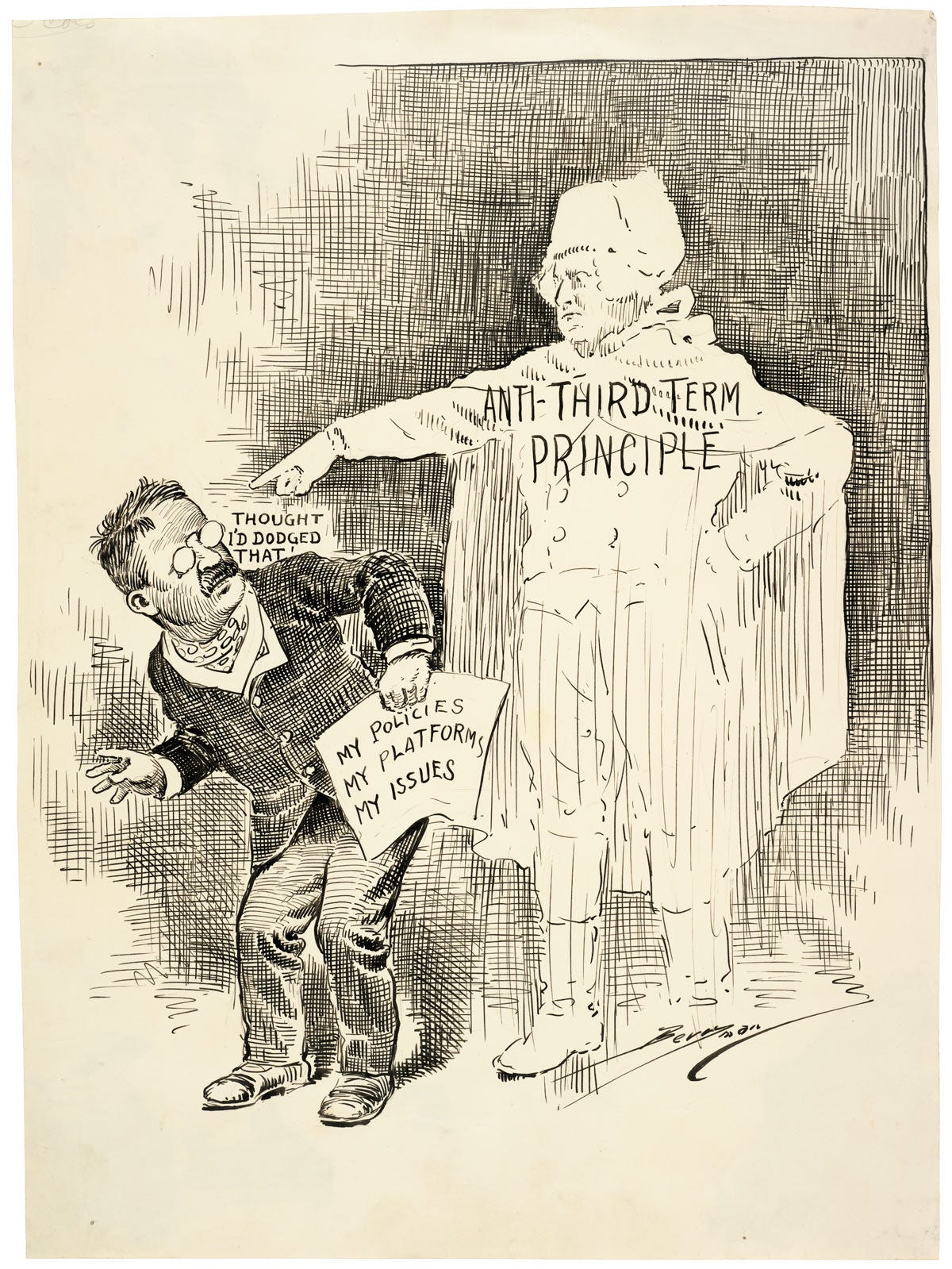
What does that tell us about how Trump supporters think about him today? To what extent are they right to see Trump as a transformational figure rather than a threat to norms?
My guess is that if I were to go dig into primary sources, the two would have been talked about in similar ways. But, of course, individual personalities matter here. Roosevelt was breaking norms for a purpose. Trumpism does not have the intellectual architecture of the Progressive movement around it, to the extent that MAGA is an ideology and not just the quirky policy instincts of a corrupt individual.
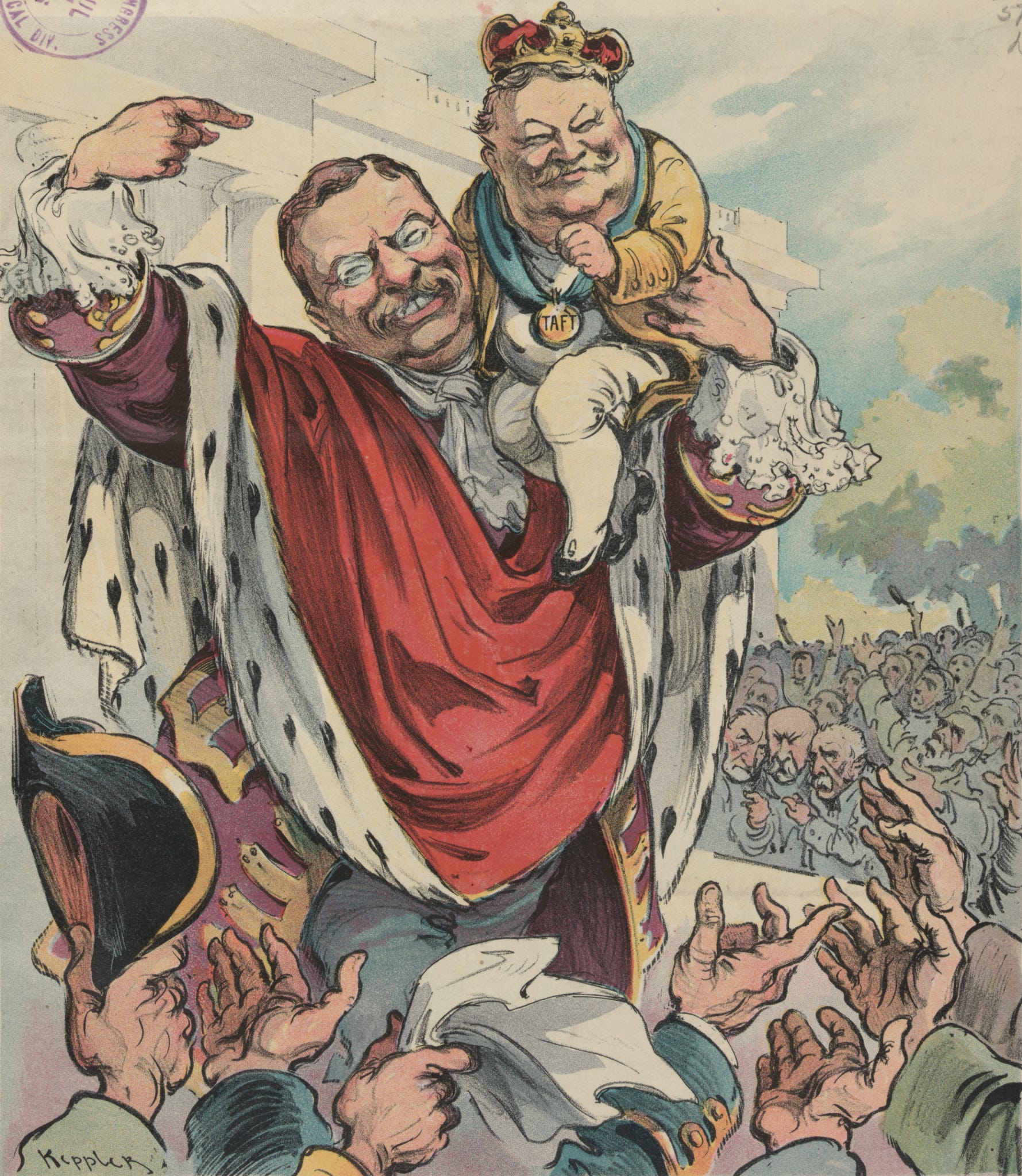

I still think Trump is unfit for the office, but this reading about Roosevelt did give me some empathy for where some of his smarter supporters are coming from. That comparison is a reminder that it’s hard to predict the verdict of history, especially around norm-breaking. But it also suggests that the cause and goals in question matter quite a bit. Trump is no Neo-Progressive.
It also makes me hope that we will see some more sensible politics around state capacity in the years following Trump. Perhaps all this norm-breaking can pave the way for the architects of the next era’s institutions. I hope that this can happen in an era of competitive elections, as I don’t see the path towards one party rule. As always, history can help us understand the questions to ask and trends to look for, but it doesn’t allow us to predict the future.
Good point, or at least good question!
Having lived in the one-party state of California for a few years, I can attest to the pathology it produces: outrageous policies with no attempt at justification, colossal yet selective generosity with public funds with no attempt at fiduciary controls or even accountability, etc. From which I take a view of good "local" politics such as: it's competition and the threat of political expulsion that keeps parties, if not honest, at least "fit" and alert - a sort of political Darwinism.
But how about national politics? Clearly, an appealing aspect of the Trump presidency is a visible drive to "get big things done, proprieties be damned" (whether they're the right things depends on your politics, and whether it "got big things done", too, will await the verdict of history).
But if we accept the above, how would we rationalize that what's preferable at the state level (competition) is not the same at the Federal level?
Your point about nationwide injunctions has merit, but doing away with them has a cost. Right now the federal district courts are under tremendous strain because of the flood of habeas petitions challenging ICE detentions. The same issues are being litigated over and over again. In the case of one issue I know about almost all the courts reach the same conclusion.