
We’re in the Patchwork Era
What the Progressive Era tells us about why nothing worked and how they fixed it

Lawmakers passed legislation requiring TikTok to be sold for national security reasons in March 2024. We didn’t want a Chinese company (ByteDance) operating an influential American social media platform and putting a thumb on the scale towards divisive content.
The TikTok deal just went through twenty two months later. You would think that if this national security concern was so great that we needed to pass a rare law targeting a single company, there would be some issues with leaving that hole open for two extra years of extensions.
And the result? ByteDance still has 20% ownership and some degree of operational control, so it’s debatable if the security risk was solved. And the Trump administration may have put a finger on the scale to help a Trump ally, Larry Ellison, take control, so we also didn’t address the concern about having the platform owned by people with vested political interests.
Read the New York Times or talk to Elizabeth Warren and her crew of neo-Brandeisians and they’d say this is just the laissez-faire, pro-corporate ethos of our era. It’s interest group politics and the winning group is big business.
But I see it differently. It feels like the incoherent lurchings of an outmoded government wrestling with new issues. The result is that no one’s interests are being coherently advanced.
Stephen Skowronek’s Building a New American State gave me a better framework for understanding this. It’s a 1982 book about the Progressive Era, but it clarified a lot about our present moment.
Patchwork and Reconstitution
The simplified narrative you might learn in a survey of American history goes like this: America’s founders built a weak, decentralized national government. In the absence of a strong administrative capacity, we developed an early state of “courts and parties.” The judiciary provided clarity on issues that impacted multiple states, while political parties dispensed administrative positions via patronage networks and helped unite the country by geography.
This system held together until the complexity of modern life asserted itself in the late 1800s, especially via new technologies like railroads and telegraphs. A new form of government was needed, and Progressive Era reformers established the nationalized, meritocratic administrative state we know today.
As always, the actual history is a bit messier, and that’s where Skowronek comes in.
He’s laser focused on institutions, leading him to discard some of the lenses other historians use. Other historians focus on interest group pressures, gaming out which groups (labor unions, railroad companies) “won” or “lost” with various policy changes. But Skowronek looks at a lot of these changes in the late 1800s and says: actually, no one’s interests were advanced.
The rules and institutions of their weak national state were just not set up to coherently respond to some of these new problems in any given direction. What was needed were new rules and institutions entirely, and this took a lot of time and struggle. Even after reformers succeeded at deeper structural reforms, their projects usually were incomplete. Reform efforts stalled out around 1920, with power sometimes still split between branches of government in unclear ways.
Skowronek tells this tale via three case studies — civil service reform, Army reorganization, railroad regulation — and argues each followed a similar trajectory. From roughly 1877-1900, reformers pushed to nationalize and “rationalize” government by applying principles of scientific management.
But these initial efforts mostly failed and add up to what Skowronek calls “state building as patchwork.” They ran up against the limits of governmental institutions optimized around the weak early American state.
Then, from roughly 1900-1920, deeper structural reforms took hold. Skowronek calls this “state building as reconstitution.” We created a more meritocratic civil service, expanded Executive Branch regulatory powers and solved some railroad issues, and nationalized the Army.
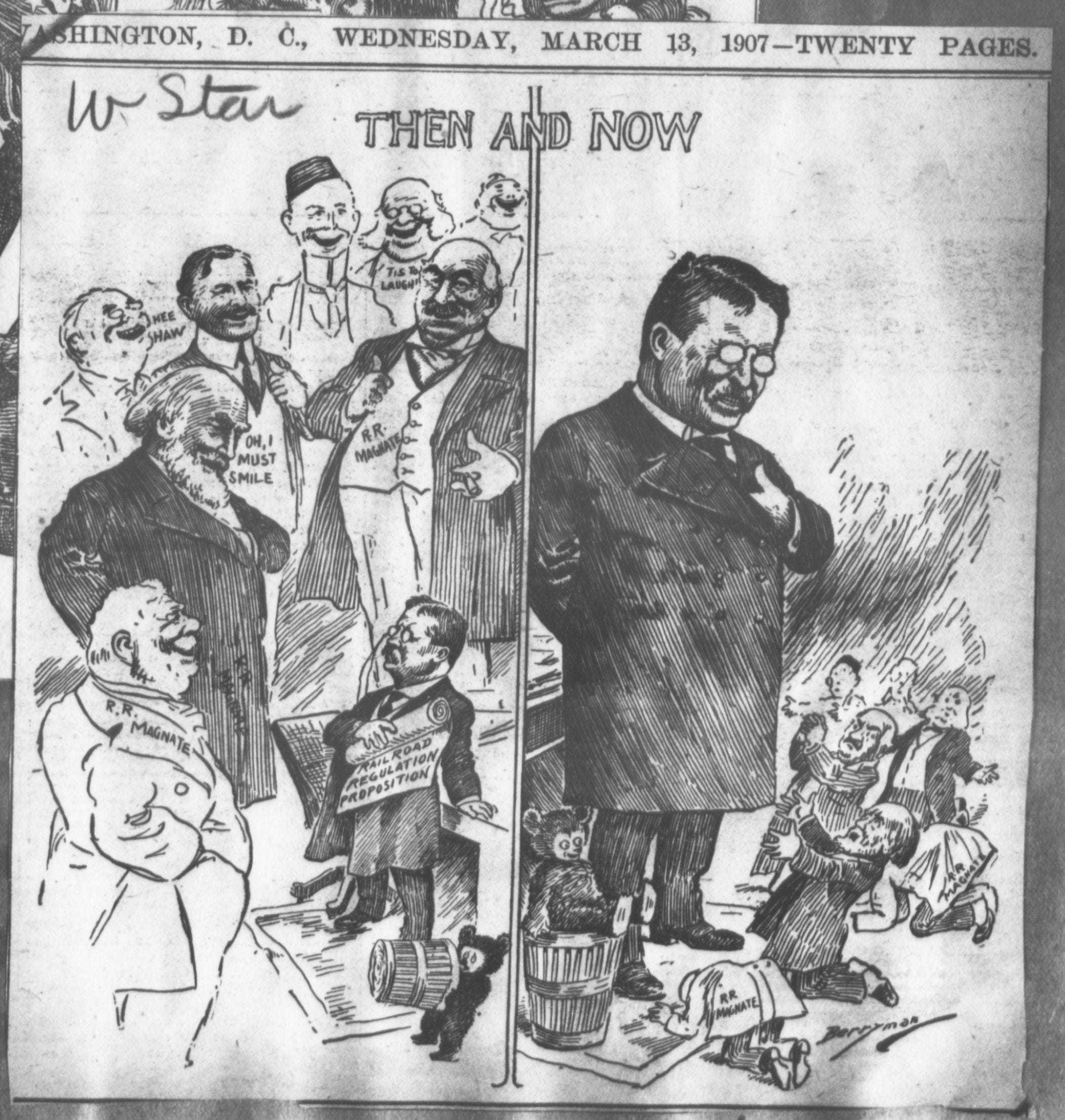
But we also kept other checks and balances in place, had decentralized and unclear lines of authority, and maintained parallel institutions. For example, we centralized the Army, but kept the more-decentralized National Guard. Even when reformers won, they had to compromise on many of their goals.
Patchwork (Neo)-Progressivism
We’re in a Patchwork era, not a Reconstitution era. Our response to new technologies and policy domains — from social media and artificial intelligence to marijuana legalization and sports gambling — is its own strange patchwork, if we even respond at all.
In Skowronek’s model, we’re not really in an era where anyone’s interests are being coherently advanced by Congressional action. Republicans and Democrats may both say that they hate “Big Tech” for their own reasons (and whenever it’s politically convenient for them). But what laws have either side passed? Even Lina Khan’s extremely controversial efforts at the FTC have been largely unsuccessful.
All this makes the book fascinating to read in the wake of Abundance and DOGE and all the current discourse about improving state capacity. My optimistic framing is that if all goes well, we’ll see this as the prelude to the Neo-Progressive era.
If you ask a historian like Francis Fukuyama, the US has never caught up to peers in Europe and East Asia in state capacity. The ability of our government to implement policy through a meritocratic Executive Branch. But the biggest increase we saw in state capacity was over the Progressive Era.
That’s why I wanted to dig deeper into that period’s successes and failures; Skowronek is a great guide.
The Elite Reform Axis
As he puts it, the reformers of the Progressive Era were largely elitists waging war against constituent parties that “were deemed inimical to ‘good government’ because they thrived on the ignorance of the voters, because they were void of principle, and because they systematically excluded those of ‘the finest culture and highest intellectual power’ from positions of influence.”
It strikes me that there’s a similar elite reform axis emerging today, which Steven Teles outlines in his Niskanen Center essay “Varieties of Abundance.” I don’t fully agree with his taxonomy, but he is right to recognize an emergent and broad-based nonpartisan elite discourse here.
One area where I wish we saw more similarities with Progressive Era coalitions: broad coalitions that include business people. DOGE was one attempt, though I don’t think it was conducted seriously and it ran aground within months. I’d particularly like to see more willingness from left-wing reformers to collaborate with business.
To draw on my own experience, I worked on a case where a trade association was pushing for a state-level YIMBY reform. This policy would have massive benefits for racial equity (with disproportionate benefits flowing to small and under-resourced municipalities), housing supply/cost, and economic growth/business (making it easier to build and sell homes). In short, a win-win for progressives and for business.
But it was incredibly hard for me to sell colleagues on the fact that business people might be doing something good, despite all the clear evidence. Ultimately, I got the grant through, but only after my colleagues forced them to write a mea culpa for wrongs committed by their trade ~80 years ago.
That skepticism and unwillingness to work in coalition is poison to the hopes of true Neo-Progressive success.
What Is Today’s Patronage System?
All of which leaves me with a question that I’m still wrestling with: what is the entrenched system of today that mirrors the patronage system of the Progressive Era?
“Nation of courts and parties” is still somewhat true — that’s a through line in American history. As Fukuyama has argued, we’re still known for having an over-active judiciary relative to our peers.
Maybe it’s interest group politics and the professionalized advocacy organizations that shape both parties. Though Tanner Greer convinced me that the two parties are quite different on this score, so I don’t know if it generalizes to the whole country.
Theda Skocpol has been sharp on how the current policy ecosystem differs from the membership associations of old. Those associations were another important part of the civic glue of both the early weak state and the Progressive Era. But I still feel like I’m missing a theory as neat as the one that Skowronek offers to explain exactly what is holding back today’s institutions.
I’ll end with one more question that I plan to take up in a follow-up post: what actually triggered the shift from Patchwork to Reconstitution? Why were deep reforms impossible in one decade and achieved in the next? The answer may be uncomfortable for people working in today’s increasingly bipartisan reform movement.
I got a chuckle out of "But it was incredibly hard for me to sell colleagues on the fact that business people might be doing something good, despite all the clear evidence."
Yes, modern-day "Progressives" (aka Stalinists) are (i) not interested in producing results, only in competing in a purity Derby; (ii) convinced that "Business" and profit-making are evil. When I lived in the SF Bay area, all regulatory attempts to increase the housing supply were met by jeers of "they're a tool of property developers" - as if housing were to materialize out of thin air, and Heaven forbid that anyone would profit by delivering a good!
With such baggage, "the Left" could only act on an "abundance" agenda by first ditching the "Progressives". Not sure if Klein et al. actually touched on this problem.