
How Useful Are Big Ideas?
Four takeaways on what pragmatism clarifies and what it doesn't.

I’ve been digging into American Pragmatism. Thinkers like John Dewey and William James who challenged old school philosophy’s focus on Absolute Truth and finding theoretical answers to society’s big questions. I wanted to take a step back and reflect on four takeaways about pragmatism that cut across all of this recent reading.
If you’re interested, there are three earlier posts in this series. The first post was on John Dewey’s The Public and Its Problems, the second was on the famous Dewey-Lippmann debate on democracy vs. technocracy, and the most recent post was examining two recent pragmatist books by Richard Rorty and Eddie Glaude.
#1: Pragmatism isn’t '“real” philosophy—and that’s fine
I mentioned this in my last post on Richard Rorty and Eddie Glaude, but essentially pragmatism feels like it was trying to define what has become the modern social sciences.

There’s an analogy here with physics, which used to be called “natural philosophy.” If you read the original Western philosophers, people like the Pre-Socratics, they are very concerned with questions about the material make-up of the world, often arguing over whether “everything is really water” (Thales) or “everything is really fire” (Heraclitus). Eventually, we got the scientific method and physics broke off from philosophy and became its own field with different rules.
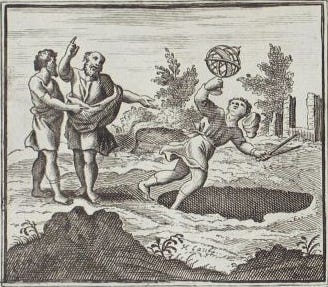
The pragmatists essentially looked at the way that philosophers weighed in on the social world. It involved attempting to think their way towards big Absolute Truths about how the world should work. How we should organize the ideal society, for example.
Pragmatists like Dewey came along and said that these thinkers had the world backwards. Don’t try and think your way from first principles and then try and match the world to your theory. Start from what is, and then try to theorize and solve our current problems.
I recently asked Matt Yglesias about pragmatism and his response included a summary of Richard Rorty’s earlier philosophical work, Philosophy and the Mirror of Nature. As Yglesias puts it, Rorty’s thesis is “that it’s not really a great idea to spend your time doing real philosophy.”
This is also Alan Ryan’s take, in his New York Review of Books essay on Louis Menand’s book on the pragmatists, The Metaphysical Club:
Critics of pragmatism have always complained that pragmatists don’t take truth seriously, but this has always been wrong. Pragmatists have never impugned the scientist’s search for experimental truth, or the novelist’s search for psychological truth. The only intellectual discipline they attacked was their own, philosophy; and what they attacked was the pretension of philosophy to stand in judgment over whatever else humankind was thinking and why.
…
It has always been a complaint against pragmatism that it is shifty about the objective existence of a reality independent of ourselves; but the truth is that pragmatists—at any rate, Peirce, James, and Dewey—were not shifty about the objective existence of the real world; they were simply uninterested in philosophical discussions of the issue.
This does leave pragmatic thinking and those who consciously see themselves as following in their footsteps in a weird spot. The two recent pragmatist books that I read by Rorty and Eddie Glaude, Jr. end up occupying an awkward middle ground between a broad-focused social science (sociology is the closest) and philosophy.
But overall, I take their point. Philosophy is an interesting mental game, but it’s likely not too useful for solving our current social ills. Or if it is, it should not be your starting point.
In that same response linked above, Yglesias goes on to say that “a lot of my favorite works by philosophers actually end up leaving the terrain of pure philosophy to mostly use some of the skills honed in philosophy seminars to tackle more important questions.”
Rorty’s Achieving Our Country meets that description and is a good example of how pragmatism can lead to a higher level of rigor from policy discussions. It’s not pure philosophy, and maybe that’s for the best.
#2: We need to constantly test ideas with real world evidence
All of this talk about the boundaries between philosophy and social sciences made me think about a 2021 conversation between Tyler Cowen and Amia Srinivasan, an emerging feminist philosopher from Oxford. Her The Right to Sex is a fantastic and nuanced collection of essays, particularly strong in its engagement with concrete news events and real life scenarios to illustrate philosophical edge cases. I’m particularly partial to her London Review of Books essay that came out shortly after the book, which explores all sorts of edge cases of animal-human… relations. Her work can be salacious and is always rigorous.

Her conversation with Tyler is contentious, but in a mutually respectful academic disagreement sense. A lot of it is him pushing on her theories with real world evidence. Here’s an excerpt from his reflection on the conversation:
I don’t think she was very good at handling empirical evidence in the context of a discussion, and furthermore this is a major shortcoming. I find this to be common amongst philosophers… I also had the feeling she is not challenged sufficiently often with said evidence, and that may partly be the fault of Oxford.
It’s interesting that Srinivasan, who at least in her essays does quite a good job of anchoring her larger ideas in real world events, still has some issues there (and I agree with Cowen’s assessment of the conversation, which is nonetheless great and worth reading/listening to).
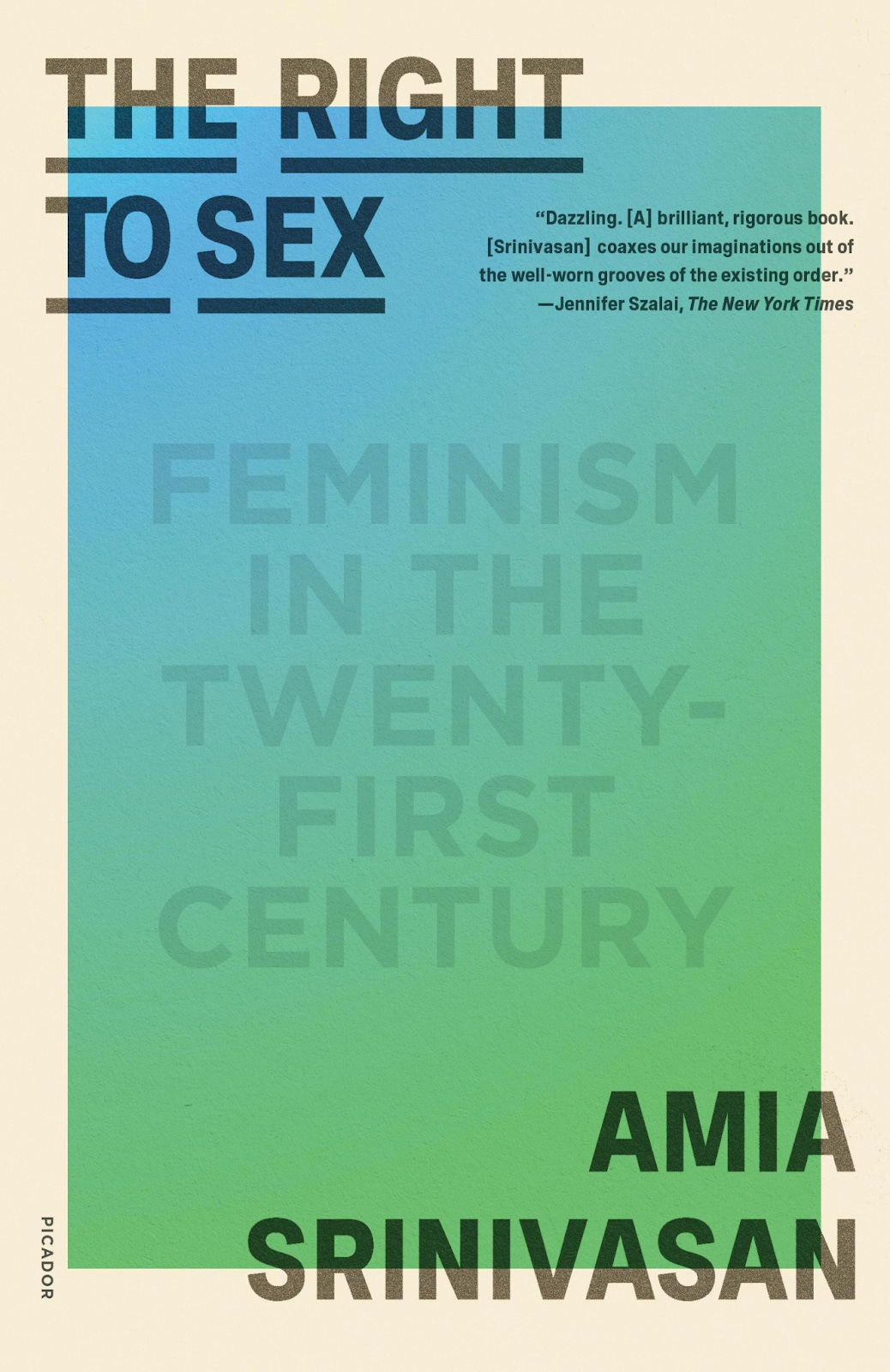
It’s a good reminder that pragmatists still have a useful intervention here: pushing philosophy to always be grounded in real world experience and to test ideas out empirically.
#3: Ideas only matter if they’re useful
Rorty and Glaude are both concerned with whether various big ideas are actually useful for impacting the world. I think that’s a pretty fundamental and important guide for how to think about ideas.
One such concept that I’ve been wrestling with for years is “narrative change,” a hot topic in the progressive funding landscape. The idea is basically that if we change how people talk about an issue, we change their mental models and thus we’ll get the kind of policy change we want. There were well-funded and deliberate efforts, for example, to get people in the media and polite society to stop using the term “illegals” or “illegal immigrants.” I wrote more about this and how it plays into broader theories of politics and social change here:

I think it’s worth applying the pragmatic lens here. Has America’s sentiment towards immigration changed for the better in the ways predicted by that theory? Not really; Trump has now won twice with immigration at the center of his appeal. See Musa Al-Gharbi’s post-election analysis:

Now we’re seeing people like Josh Barro openly suggest that Democrats should start using the term “illegal immigrant” again:
We should also, by the way, bring back the term “illegal immigrant.” In general, I’m not big on fighting over language — I think Democrats’ main political problems stem from the unpopular content of the policies our candidates support, and that weird language choices are more a symptom than a cause of our estrangement from the median voter. But the refusal to use the word “illegal” has arisen out of a successful pressure campaign that has convinced many Democrats that there is nothing particularly wrong with being in the country without authorization. And that has made it hard for Democrats to say something they really need to say to regain trust on the issue: that being in the country illegally is reason enough to deport someone. Personally, I have tended to use the term “unauthorized immigrant,” because it’s just as accurate as “illegal,” it avoids disputes over whether “illegal” implies a criminal violation or can also apply to civil ones, and it’s not so euphemistic as “undocumented,” a term that makes it sound like someone just forgot to get a visa. But I think freeing Democrats to say “illegal immigrant” again will make it easier for us to get back into the habit of remembering that deportation is a necessary part of having an immigration policy, and not a dirty word.
In some sense, he’s also embracing the “narrative change” theory here, particularly in the last sentence. Using particular terms will cultivate a particular habit of mind that will lead to a shift in policy outcomes, or at least what Democrats prioritize.
Personally, I’ve just come to de-emphasize the whole “narrative change” way of thinking, based on my pragmatic read of the usefulness of these ideas. It’s not a crazy thing to work on, but they’re not the questions I’m interested in asking and answering.
#4: The big limitation: a lack of normative goals
When truth is relative, it’s hard to have much moral urgency behind your stated goal. Another way of thinking about it is: if the test of an idea is how useful it is, how do we define “useful?” And useful in achieving what?
I think that’s part of why people strongly influenced by pragmatism struggle to chart a new way forward. In Eddie Glaude’s book In A Shade of Blue, he basically just says “there should be a new approach to Black political leadership” and leaves it there. In Achieving Our Country, Rorty does chart a new way forward, advocating for New Deal-style politics and redistribution. But what’s missing is clear reasoning around why that should be America’s goal.
He says equality is the main goal, but others can differ. Even Rorty would stop short of the full-bore equality of communism.
Maybe our goal should instead be economic growth? After all, economic growth is why even the poorest in America today have a more complete diet than many well-off people in the Middle Ages. Pragmatism doesn’t necessarily give us any tools to help decide between Rorty’s goals and anyone else’s.
There is, of course, a Deweyan answer: we all have our opinions and we use democracy to net out at what self improvement means for our polity. But that’s less exciting and it’s harder to make an appeal for your national hopes and dreams without an appeal to Absolutes and normative visions of the greater good.