
Why Prison Abolitionists Should Fund More Police
Taking the Framework Seriously

Prison abolition is one of the sharper left-leaning frameworks that I encountered in the last ten years, even as I moved away from Marxism. Even as I’ve moved in a more pragmatic direction, I’m hugely sympathetic to that movement’s goals. If you take prison abolition seriously as an analytical framework, it logically requires more police, not fewer. Here’s why.
I wrote recently about the value of dipping into both anarchist and neoliberal thinking, even if you reject a lot of their agenda. One of my life’s callings is to expose myself to as many ideological, cultural, and professional bubbles as I can and do my best to understand them. Following the lead of David Epstein in his excellent Range, I have found that there is value in being a wide-ranging generalist who can translate lessons across intellectual domains and ideological bubbles.

The whole post builds on James Scott, who says that it’s useful to occasionally put on “anarchist spectacles” and use anarchism as a lens to understand history. Afterwards, someone close to me asked what other lenses are useful. To my surprise, prison abolition is the one that came to mind.
Angela Davis is Not Obsolete
Years ago, I read Angela Davis’s Are Prisons Obsolete? (2003), and I’ll use her book as the jumping off point here. I’ll be honest that I haven’t found Angela Davis to be terribly impressive, both in her younger firebrand days and her current elder-stateswoman-of-the-Left persona. But here she does her homework and packs a tremendous amount into around 130 pages.
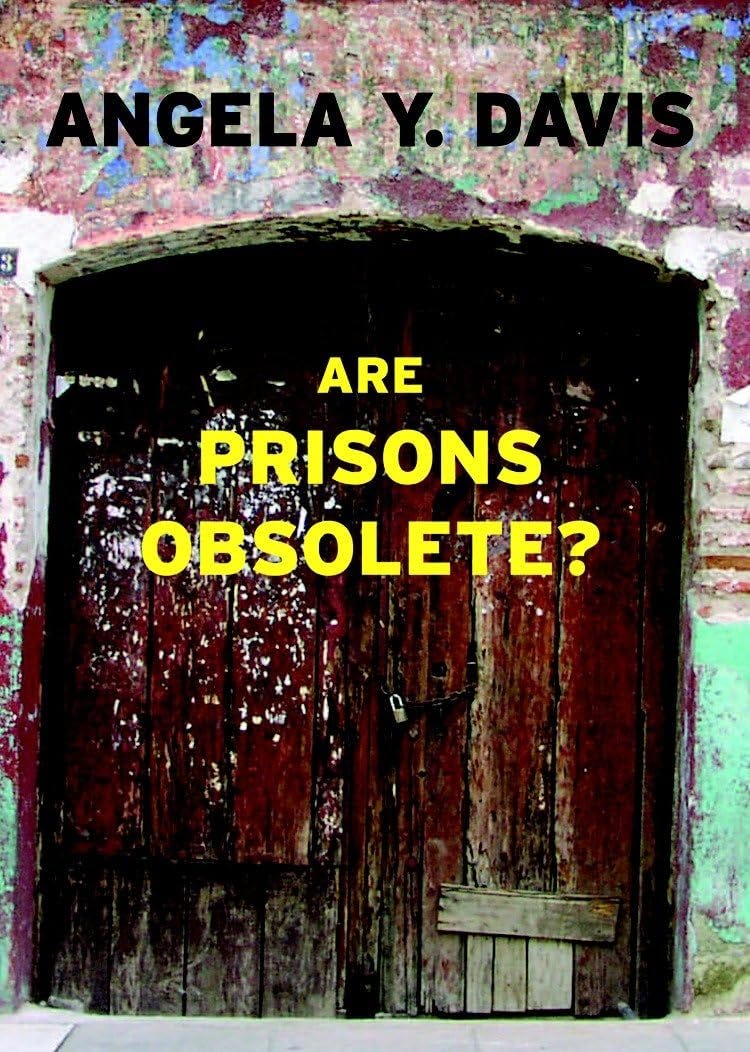
There are three reasons that the book is worth reading: (1) it’s full of important history; (2) it distills a hugely-influential view of racial mass incarceration; (3) she articulates prison abolition as a unified left-wing agenda in a way that has some merit. I’ll go through these briefly.
I’ll gloss over (1) and (2) for the purposes of this post. But quickly: learning about the Quaker roots of incarceration (and the reason they thought solitary confinement was the best form for prisoners) was fascinating. Wild how what’s enlightened in one era can feel barbaric in another. Davis makes a compelling version of the racial mass incarceration argument that Michelle Alexander later popularized—I have some quibbles with it, but it’s been hugely influential in driving bipartisan reform and thus worth understanding.
Finally, Davis makes a compelling argument for prison abolition as what I’d call a directional litmus test to apply to policy. Prison abolition doesn’t just call for fewer prisons, it calls for a more comprehensive shift towards a less carceral world, more oriented toward holistic community safety as a way of reducing crime without needing to police people. So it involves less surveillance, less police, and generally moving our system away from punishment as a tool.
Overall, the prison abolition “lens” helps spotlight the downsides of incarceration itself, as well as having the state intrude too much on our lives in other “carceral” ways.
Angela Davis is not as naive as many “Defund the Police” or “Abolish ICE” advocates are today (at least in this book, I’ll choose not to watch any recent lectures). After all, recall Betteridge’s law of newspaper headlines: “Any headline that ends in a question mark can be answered by the word no.” The same could be said of book titles, and Davis clearly did not feel confident enough to write a book called Prisons Are Obsolete.
We may not be in a situation to abolish prisons yet. But the book suggests that we should ask about individual policies: does this bring us closer to a world where we need fewer prisons, maybe eventually no prisons?
When I first read this around five years ago, I found it to be a great litmus test that unites more disparate policy domains than a lot of more common ones on the Left. I’d rather use this question as a guide than “does this policy reduce inequality,” for example.
Some policies on the menu that contribute to Angela Davis’s alternative vision for community-focused, anti-carceral safety:
Expanded mental health and addiction treatment
Stronger schools (especially early grades)
More stable work and income (apprenticeships, wage subsidies)
Restorative justice / community-based violence interruption
Decriminalize low-level offenses (e.g. marijuana use)
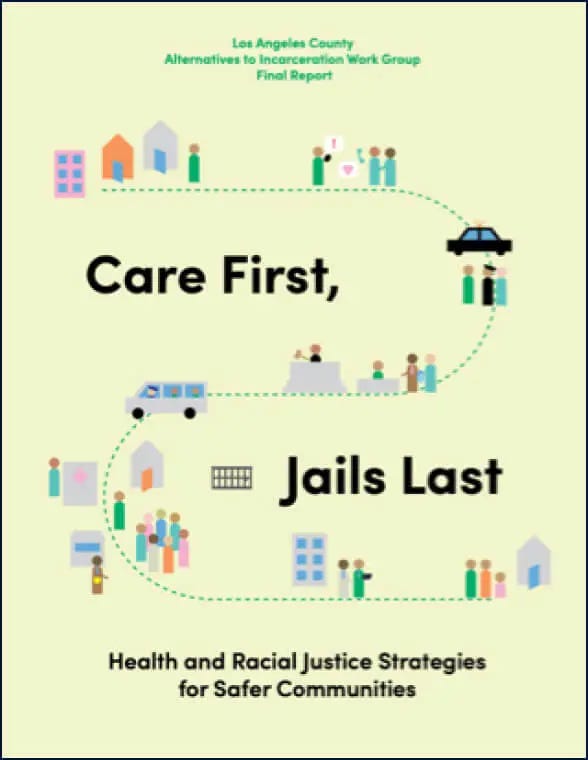
For years, I found this compelling. Then I started looking at the evidence for whether these policies actually reduce crime.
Crime policy needs to focus on crime
Unfortunately, the programs that Davis identifies just don’t have a big impact on crime. In the end, we’re stuck with an inevitable tradeoff between crime deterrence and punishment, both of which require some degree of “carceral” action. There’s not a neat way out of this tension.
The hope is that improving someone’s life upstream (better schools, stable income, health insurance) will “cascade” into less crime downstream. But when researchers test this rigorously, these cascade effects are small or nonexistent.
Megan Stevenson’s recent review of the evidence in the field of criminal justice (which I wrote up at the article linked below) is devastating on this point, and it tracks with what we’ve seen from studies of cash transfers and Medicaid expansion.

The programs can still work on their own terms. Giving people money improves their finances; health insurance improves health. But the crime reductions don’t follow. Angela Davis’s holistic approach doesn’t pan out. That is a serious dent in the “prison abolition” worldview, as well as similar frameworks like “Social Determinants of Health” that hold sway in the public health world.
As I’ve said, no model is perfect. Prison abolition highlights some legitimate problems with incarceration and other carceral activities. It still provides a directionally good goal that can unite a bunch of different policy domains together.
But if we take Angela Davis seriously, but also take Megan Stevenson seriously, what does that say about criminal justice policy?
Stevenson’s work cuts against the progressive tendency to lump all issues into one Omni-Cause and instead calls us to focus more narrowly on criminal justice policy as the lever to effect change in the criminal justice system. Concretely, we need to junk #1-3 in the Davis policy menu above and focus more on stuff like #4-5. What, then, should we do to move towards a society that needs no prisons?
Democracy and backlash
As we seek to answer that question, there’s one more wrinkle: democracy.
If we take prison abolition in a democracy seriously, the relevant question is a long term one, not a short term one. Instead of asking “how do we reduce the number of people in prison tomorrow,” we need to ask “how do we reduce our aggregate societal need for prisons in a sustainable way.”
I say this because, in a democracy, if you allow crime to rise you will see law-and-order backlash. This is essentially a law of nature in politics. It’s an especially acute dynamic in Latin America, where this phenomenon drives most of the pendulum swings to the Right that we see in the region (most recently in Ecuador and Chile). So if you care about the long game, you have to worry about the sustainable piece. Or you have to give up on democracy.
Relatedly, this imposes some limits on how much you can decriminalize sustainably. Marijuana decriminalization worked out okay, with some drawbacks. But take the example of San Francisco, Oregon, Washington, and British Columbia. Each of these places tried to experiment with decriminalizing other drugs so radically that it was rolled back almost immediately. People got tired of rampant and flagrant drug use in public spaces. This all failed so fast that we already have a Keith Humphreys post-mortem called “The rise and fall of Pacific Northwest drug policy reform, 2020-2024” (which I wrote up in the short post below).

So again, I take prison abolition seriously, but I recognize that cascade effects don’t work and we live in a democracy that demands some degree of order and accountability for crime. This brings me to my unexpected conclusion: the best policies I can think of to meet prison abolition’s goals are more police and more surveillance.
Deterrence above all else
Deterrence is important because we live in a democracy and prison is really bad. People demand some degree of accountability when crimes are committed. If politicians do not provide that, they will be voted out.
Given that, we need to actually stop crimes from being committed. And this is doubly important because prison itself is criminogenic. Meaning, it makes people more likely to commit crime. Prisoners are often subjected to abuse and violence from guards and other prisoners. In the process it embeds you in networks of other criminals, who you often need to work with via prison gangs for protection.
Meanwhile, it crushes social ties, removing you from your family and employment. It then marks you as an “ex-convict,” making it hard for you to get a job afterwards and reintegrate. All of this is a recipe for increased crime once people get out. This insight from the prison abolitionists is backed up by quantitative data, like this study from Argentina which finds that recidivism drops by 48% when you release someone with an ankle monitor before their trial instead of putting them in jail.
What works?
My best guide for all things criminal justice is Jennifer Doleac, an economist who focuses on crime and currently works at Arnold Ventures. I’ve followed her work since 2019, when she launched the podcast Probable Causation, where she interviews other crime researchers about their work. It doubles as an overview of promising interventions in the field and a window into the nitty gritty of how to do rigorous research: how do you get the relevant data sets? How do you design a good experiment?
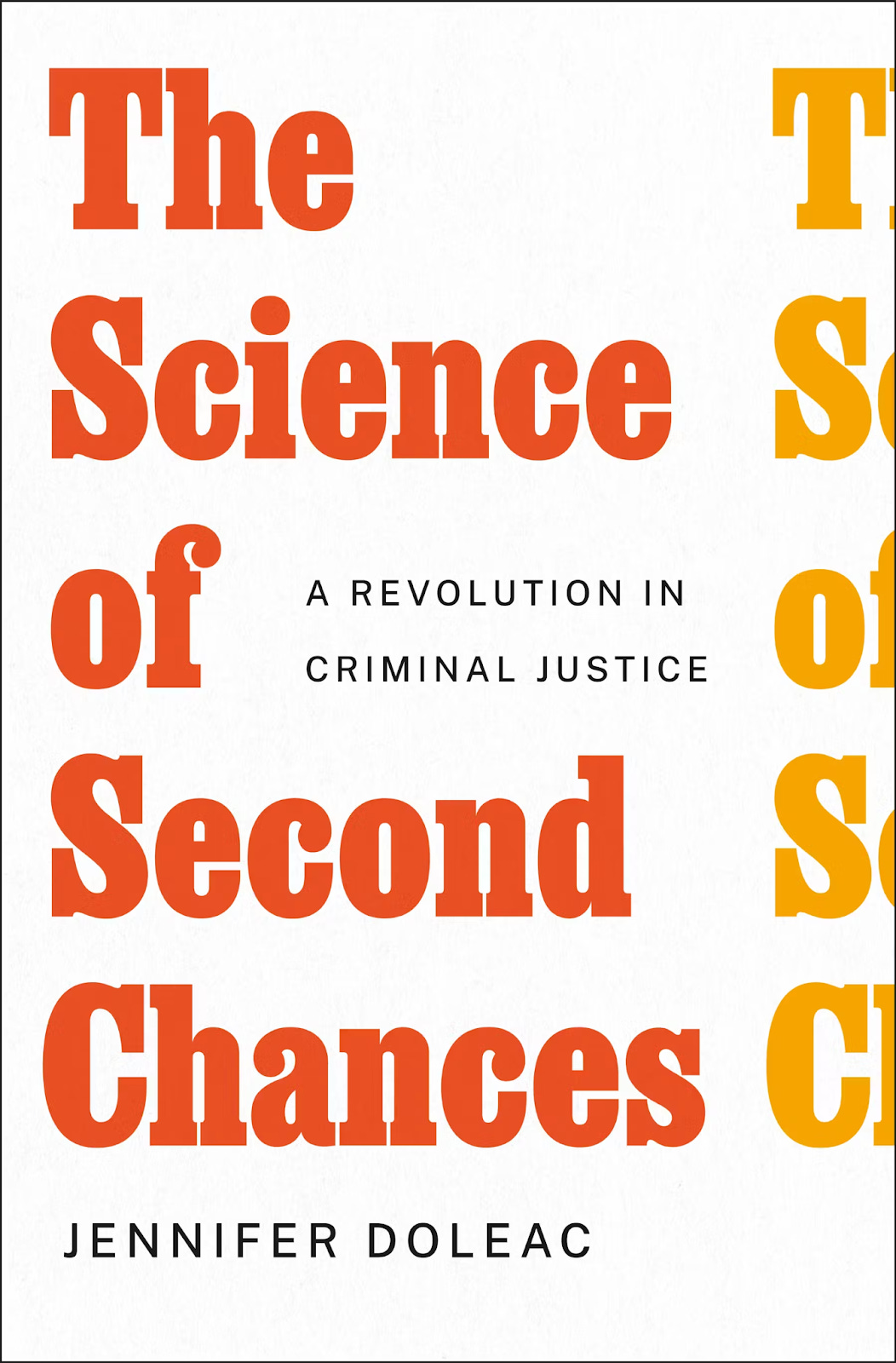
But if you want a shortcut to the conclusions drawn from that podcast, I’d recommend a review paper that Doleac wrote titled “Encouraging desistance from crime.” She’s also got a book dropping tomorrow titled The Science of Second Chances that I expect will cover a lot of similar ground (here’s a recent interview in advance of the book).
I don’t have the time to dive into all of her takeaways, but they don’t fall neatly along the ideological spectrum. This is real, hard-nosed truth-seeking. I’ve learned about as many null findings from her as I have promising interventions, which is a good sign.
Some takeaways? The certainty of being punished if you commit a crime turns out to matter a lot more than the severity of punishment (which Alex Tabarrok also wrote about here). That’s part of why having more police on the street helps reduce crime, especially if they are dispatched to “hot spots” with lots of violence and other criminal activity.
Check out this episode with Morgan Williams, who wrote a paper with Aaron Chalfin and others that found that for every ten cops that are added to a police force, one homicide is averted, with this being twice as likely to avoid a Black victim as a White victim. Serious crime arrests went down and racial disparities in arrests didn’t get any worse. Arrests for lower-level crimes did increase, so it is worth thinking through what the overall effects on incarceration are, but for the money this is one of the best ways to deter the kinds of serious crimes like homicide that have been driving mass incarceration.
I suspect for many readers, this will be the most unexpected claim I make. I’ll back it up with this survey of criminal justice experts, where most agree with the statement “Increasing police budgets will improve public safety.” If you read their disaggregated answers, almost all of the people who disagree say that it’s because it depends on what the money is spent on. Multiple people say some version of “I’d agree if we stipulated that the money was spent on hiring more cops.”
On the subject of surveillance, Denmark has had incredible success by having a DNA library of people who commit criminal offenses. Doleac and two other authors found that being added to this database reduced recidivism by 40% in the next year because people knew they were much more likely to be caught. That’s a remarkable effect size.
Abolitionists are likely to chafe at surveillance, too, as it’s part of the suite of “carceral” policies that they oppose. But in a democracy where crime will happen, I’d love to try and reduce crime and imprisonment. Maybe then we can chip away at DNA databases?
On the more “crunchy” left wing side, perhaps the best current hope for the prison abolition agenda lies in restorative justice practices, which take a more holistic view of community healing. If the perpetrator can reach mediated reconciliation with people harmed by their actions, they can avoid incarceration. I recommend Doleac’s podcast with Yotam Shem-Tov, who conducted a study of a pilot in San Francisco. I’m worried that these smaller-study findings will fall apart as we scale, but I really hope they don’t.
Conclusion
I’m convinced by prison abolitionists that this problem is urgent. Prison is brutal, often criminogenic, and we should want a society that needs less of it. But a problem this serious requires equally serious solutions. And the evidence points in the opposite direction of what I see most prison abolitionists advocating for: more police on the streets, more certainty of being caught, plus better-funded prisons that are less violent and more rehabilitative.
These aren’t policies you’ll hear often from prison abolitionists. But if you take their framework seriously (as an analytical tool rather than a slogan), they might be the fastest routes to the world abolitionists say they want. That’s the cost of staying stuck in one epistemic bubble: you can end up advocating against your own goals.
I've been hearing the "probability of being caught, not severity of punishment" result cited for many years now, and I wonder whether you know whether there are multiple confirmations of this plausible observation. I have incorporated this result into my own policy preferences, and I would certainly like to know how robust it is.
Quite persuasive, I updated. Two other notes:
* Following the Vox link ("I have some quibbles with it"), I briefly thought you were confessing that "Ben" was a pseudonym covering your true identity: German Lopez.
* Consider this another vote for "Range". As a former English Literature PhD candidate who's been working as a software engineer for a few decades, it flatters my life choices. But it also makes very good arguments, and the story of the Ospedale della Pietà is quite something.