
The Super-Canon Problem
On the Ramones, Borges, Patricia Lockwood, and 100 gecs

Sometime in middle school, I walked into a Barnes & Noble and bought a Ramones CD. Neither their famous self-titled debut, nor the critical favorite Rocket to Russia. It was Greatest Hits Live, a 1996 live album recorded right before the band broke up. No one would ever tell you that’s the best way to get into the Ramones. But it worked!
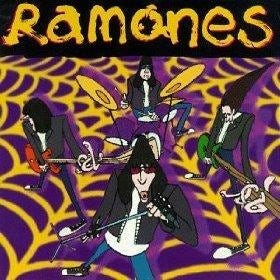
The album sounds different from their classic studio records. It doesn’t have the same bubblegum pop flavor. Instead, it sounds much more like the hardcore punk that came in their wake. Faster, harder, more aggressive bands like Minor Threat. Joey Ramone’s vocals sound tossed off, the tempos faster, the guitars and drums louder.
Just listen to the first 10 seconds of each of these versions of “Do You Wanna Dance” to get a sense:
It’s a quirky set list, too, that includes the Spider-Man theme song for no apparent reason and a Motörhead cover that’s actually a tribute to the Ramones.
Because I encountered the Ramones this way first, I heard their classic studio records in a different way. I struggled with the lack of edge, the bubblegum sheen. I had a hard time understanding why the music was supposed to be daring or shocking, because it sounded so tame. Not just compared to other punk music like the Dead Kennedys or Sex Pistols, but compared to the Ramones themselves.
I was thinking about these early musical discoveries after reading Molly Mary O’Brien’s recently essay on the “iPod brain.” She argues that the iPod era was a sweet spot for musical discovery. The internet gave you access to an unprecedented amount of music. The iPod hardware gave you enough capacity to be eclectic and expansive, but enough constraint that you had to be intentional about what you loaded onto it.
I came of age musically in a way that bridged the CD era and the iPod era. My dad made me a classic rock mix tape for my eleventh birthday, and within a couple of years I was deep into internet music forums, pirating MP3s on Soulseek, buying random CDs and records at stores, using eMusic and early iTunes.
I got a mix of canonical guidance and genuine haphazard discovery that I don’t think exists in the same way today.
100 Gecs and Their Precursors
Why does this matter? First, a postulate: most of the best new art (and art criticism) arises from strange and unexpected recombinations of previous media.
The Ramones did this themselves — they took bubblegum pop and mashed it together with the harder edge of what was happening at CBGB and in proto-punk garage rock (e.g., The Stooges, New York Dolls). Rock critic Stephen Hyden recently said that they teetered between the smart-meta-pop-trash of Jean-Luc Godard and the actual-pop-trash of Herman’s Hermits.

I’ve been thinking especially about this in the wake of hyperpop, a recent strain of frenetic and terminally-online musical collage. Artists like 100 gecs and their more accessible peers like Rina Sawayama have made me rethink a lot of the music I grew up around in the late ‘90s and early aughts — pop-punk like Fall Out Boy, alt-rock like Evanescence, nu-metal like Slipknot.
On the Sound Opinions Music Board, where I spent my teenage years, that stuff was frowned upon by the hipsters, and I absorbed some of that snobbery. It took newer artists who grew up actually loving that music to put it in their own weird blender, mix it with other influences, and spit it back out in a way that made me hear it differently.
This is basically what Borges describes in his essay “Kafka and His Precursors.” His argument is that when a great writer recombines influences in a sufficiently original way, they retroactively change how we read their predecessors.
Borges traces a set of writers — Zeno’s paradoxes, Kierkegaard’s parables, Browning’s poetry, a ninth-century Chinese prose writer named Han Yu — who share almost nothing with each other, but who all feel “Kafkaesque” once you’ve read Kafka. Without Kafka, we probably wouldn’t perceive that quality in any of them, and we certainly wouldn’t see the connections between them. As Borges puts it, each writer creates his own precursors.
Critics immediately started writing “100 Gecs and Their Precursors.” Once I heard hyperpop, I could suddenly hear the future promise of Rina Sawayamma in Evanescence, the future promise of quinn in Fall Out Boy.
The Super-Canon Problem
Here’s where AI comes in. Everyone in the world can now go to ChatGPT and ask “What’s the best Ramones album?” It’ll tell you Rocket to Russia. It will never tell you to go listen to Greatest Hits Live. That’s fine as far as it goes — Rocket to Russia is indeed the best Ramones album and it’s better than a somewhat mailed-in live album.
But AI is creating what I’d call a super-canon: an über-consensus version of what’s good, available to everyone instantly, drawn from the accumulated weight of decades of criticism and recommendation. As Jerusalem Demsas said about AI in general, it’s a centralizing technology.

This isn’t just an AI story. It’s the endpoint of a longer arc of centralization and standardization in the arts broadly. The internet already centralized access to critical consensus; I grew up using Allmusic to find the highest-reviewed albums from artists and usually started my listening there.
Professionalized creative training (think MFA programs) have already standardized how artists learn and what feedback they get, smoothing out what’s weird and idiosyncratic about individual voices. Algorithmic recommendations on Spotify and YouTube already push people toward the same consensus picks. They even push people towards the same “underrated classics,” boosting genres like Japanese City Pop.
AI is accelerating a dynamic that was already underway.
I thought about this when I recently read Patricia Lockwood’s latest novel about long COVID.
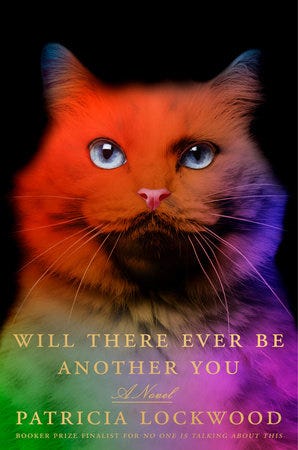
The book was an experiment and mostly a failure (though don’t overlook her previous two books!). But I still found it more interesting to read than MFA-trained writers like Ocean Vuong.
Lockwood’s sentences walk a tightrope between hilariously sly and overly-obtuse. At her best, she has Vonnegut’s pacing and feel for a punchline. At her worst, she weighs down her work with formal tics and jokes that are so veiled and meta that they don’t land.
When I read a New Yorker profile of Lockwood, I learned she’s completely self-taught, not a product of any mainstream literary training pipeline. Her voice is so clearly hers and even when it doesn’t fully work, it’s more alive than polished institutional output.
This used to be much more common. Remember that William Carlos Williams was a doctor and Wallace Stevens worked in insurance.
The Returns to Being Weird
Ezra Klein and others have talked about how AI will increase the returns to having your own taste. The returns aren’t just to “taste” in the abstract, I think they’re to being a specific kind of weird person — someone who either surfaces niche art and recombines it in unexpected ways, or engages with well-known art through anti-canonical pathways that lead to genuinely fresh perspectives.
I’m ultimately a man of the canon. When I find a new band, my first instinct is still to look up their best album and start there. But I think the super-canon — AI consensus layered on top of algorithmic recommendations layered on top of professionalized criticism — is going to make us hunger for voices like Patricia Lockwood’s, for art that comes from the edges rather than the center, and for the kind of accidental discoveries that no algorithm would ever recommend.