
Nobody Was Satisfied. Everything Got Built.
The pluralistic mess of Gilded Age cities

American local government around 1900 has a bad reputation. It’s known as an era of “Machine Politics” and “Boss Rule.” Corrupt political parties divvied up public contracts and practiced open bribery. The backlash to this era is part of what produced the Progressive Era state reforms, which I’ve been mining for lessons for today’s state capacity-focused reformers.
But there’s a strange tension here. We still love and admire what was built in that era. Public works like the Brooklyn Bridge, Carnegie Hall, countless beautiful public libraries.
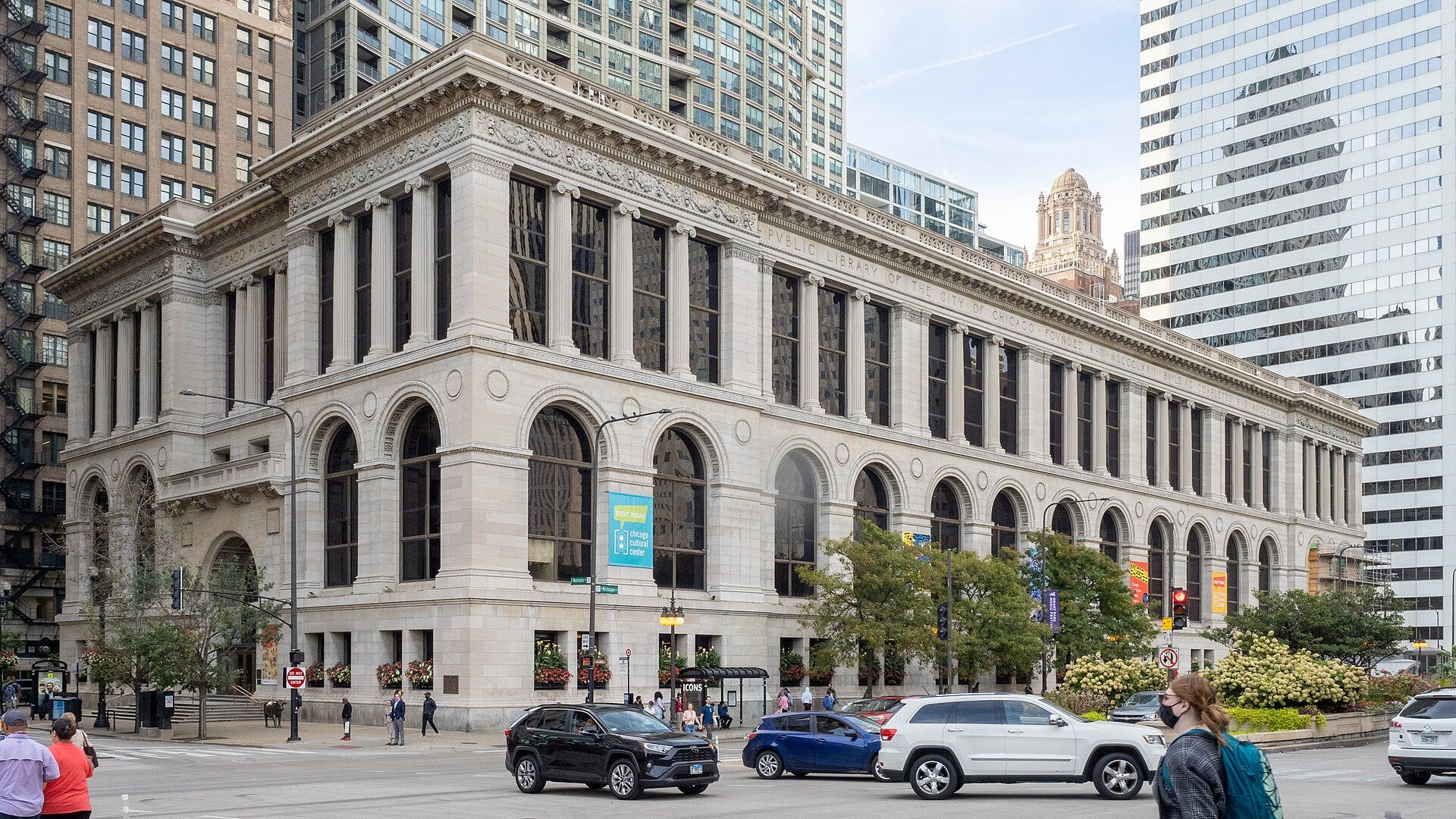
Even more important than those civic landmarks are the feats of civil engineering produced in this era. Paved roads, electrified street lights, aqueducts, and sewer systems that we still use today. Over a hundred years later, we are still living in the cities constructed in that era.
So how bad can this era be, given that we still love so much of what it produced? That tension is the jumping off point for Jon Teaford’s The Unheralded Triumph: City Government in America, 1870-1900.
The nostalgia for the big state achievements of that era has only grown in recent years, particularly from Abundance types who want the government to perform better. There’s a faction of that movement, typified by Stripe CEO and philanthropist Patrick Collison, who want to focus more on beauty in public works. Ross Douthat has recently argued that this should be a principal focus of what Nan Ransohoff has termed “the third wave of American philanthropy” that will emerge from AI wealth.
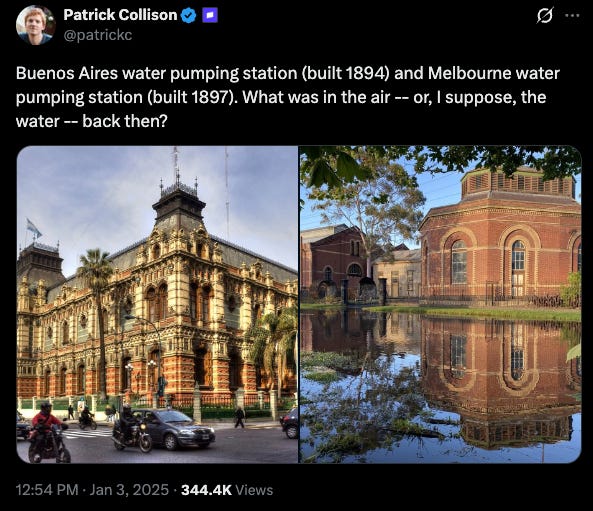
People admire what was produced in this era, so let’s look at how the sausage was made.
My main takeaway from reading Teaford is that a lot of the easy dichotomies that we use to describe the Gilded Age and Progressive Era dissolve into a mess of factions and power-sharing. The self-interest of machine politics and the idealism of reform movements were a part of this pluralistic mess. But somehow this mess produced a lower-case-L liberalism that built, to butcher Ezra Klein’s phrase.
The messiness of the era is a challenge to our contemporary interest-group veto politics, but also to the technocratic bent of Abundance politics. Neither centralized authority nor fully-decentralized negotiation describes the form of old municipal politics, though it’s closer to the latter than the former.
How Cities Actually Worked: The Factions
Teaford’s book is a highly descriptive and granular work of history, but his overall point (made in 1984) is simple: this era of city government gets a bad rap. Machine politics were real and corruption did exist, but the cities deserve much more credit for what they accomplished than they typically get.
First, how did city government actually work in this era?
The simplified narrative pits corrupt party bosses versus an emerging class of reformers, who would later crystallize into the Progressive Movement and take over both national political parties by 1912. But in reality, it was a thriving ecosystem with a handful of factions:
Mayors: typically successful business people. Teaford says primarily they were “downtown bankers, wholesalers, manufacturers, and lawyers.”
Ward legislators (aldermen): often immigrants and small business owners. These businesses often kept them in regular contact with residents, but were low status. A saloon keeper is the platonic ideal here. Their job was to advocate for material resources (e.g., paved roads, street lamps) for their wards.
Emerging professional civil servant class: engineers, teachers, doctors, public health professionals, firemen, you name it. All of these professional groups were emerging with their own specialization, standards, and interests.
Civic organizations: Some of these, like Chambers of Commerce or specific professional associations, still exist today. Others, like “good-government clubs,” are more an artifact of the highly-associational Progressive Era.
Last, but not least, the infamous Party Boss. Teaford reframes them less as “dictators” and more as “brokers.”
Essentially, the Party Boss mediated between the interests above, sometimes in collaboration with the Mayor. Along the way, they tried to get a cut for their party members. Maybe a bribe, maybe a contract for waste management for a friend’s company. But, all in all, “boss” is too strong a word.
So that’s how city government worked. You have a highly pluralistic democracy, with business interests, public interests, higher class, lower class, professionals, amateurs, native-born Americans, immigrants. And then you have party bosses to, in Teaford’s words, “create coalition in the place of conflict” between such a diverse group.
Reversing rivers like Old Testament God
We’ve already covered some of the era’s achievements. But it’s jaw-dropping when you put them all together, as Teaford does here with Chicago:
In 1830 Chicago was a frontier trading post with a few log structures, a few muddy paths, and a few dozen inhabitants. Seventy years later it was a city of 1.5 million people, with a waterworks pumping 500 million gallons of water to its residents each day and a drainage system with over 1,500 miles of sewers.
…
In a single lifetime Chicago residents had transformed a prairie bog into one of the greatest cities in the world, and during this short period the governmental authorities, with remarkable energy and daring, had provided migrants to the metropolis with a level of public services rarely equaled in the world of the late nineteenth century. In the 1850s the city council had ordained that the level of the swampy city be raised ten feet, and it had been done. In later decades the municipal authorities had ordered that the flow of the Chicago river be reversed, and so it was reversed. The achievements of government in Chicago at times rivaled the feats of the Old Testament God. Moreover the Chicago experience was representative of what was happening throughout the nation.
Teaford also compares American cities to those in Europe. America had the edge on parks, libraries, public health, fire departments, public transit, and basic infrastructure like roads. Europe had us beat on policing and services for the poor. Broadly, Europe is better at “social control”:
[The American city] was unable or unwilling to master the social environment through the imposition of stringent codes of morality or vast ameliorative schemes for the reformation of the pauper. It planned and harnessed the inanimate; it was less systematic and overpowering in its response to the animate.
There’s a similar divergence between America and Europe today, except that America has gotten much worse at building stuff.
So why the bad reputation?
Teaford sketches out a diverse, pluralistic city that accomplished a tremendous amount, all while integrating people of different classes, ethnicities, and professional backgrounds. So what’s the issue?
Put simply, elites were grumpy that they had to share power with common people like saloon keeper aldermen and immigrants. That pseudo-aristocracy wrote the first draft of the history and their narrative of an immigrant-run, corrupt politics became locked in.
I find this explanation unsatisfying. Corruption was bad and a moral offense to the public.
Teaford’s argument isn’t baseless. At one point, he empirically examines the fiscal impact of graft and finds that budget effects were minimal:
Yet during the 1880s and 1890s graft did not lead America’s cities to bankruptcy nor did it result in rapidly mounting tax burdens. Instead, tax levels remained stable and municipal credit improved while city services increased and public facilities expanded. In other words, graft remained at an economically tolerable level, a level that did not seriously disrupt the prevailing fiscal conservatism of the nation’s cities. It may have existed, but it did not drive investment bankers to eschew municipal securities or force city governments into the arms of receivers.
This is an absurdly dry, technocratic way to think about this issue. And I should know, I’m a dry technocrat!
If you read the beginning of The Power Broker, or read any stories about the Progressive Era, it’s hard to say that the only reason that Gilded Age is remembered poorly is because of grumpy elites.
The people themselves were upset about corruption! It led to a reform movement that was so powerful that it took over both of the major American political parties. There were three major presidential candidates in 1912, all of whom were progressive reformers. Something bigger is going on here.
And that something is a sense of public, moral injury. I recently read Holy Joe, a biography of Joseph Folk, St. Louis’s bribery-busting circuit attorney-turned-Missouri-governor. He broke up Ed Butler’s “Big Cinch,” the equivalent of Tammany Hall in St. Louis.
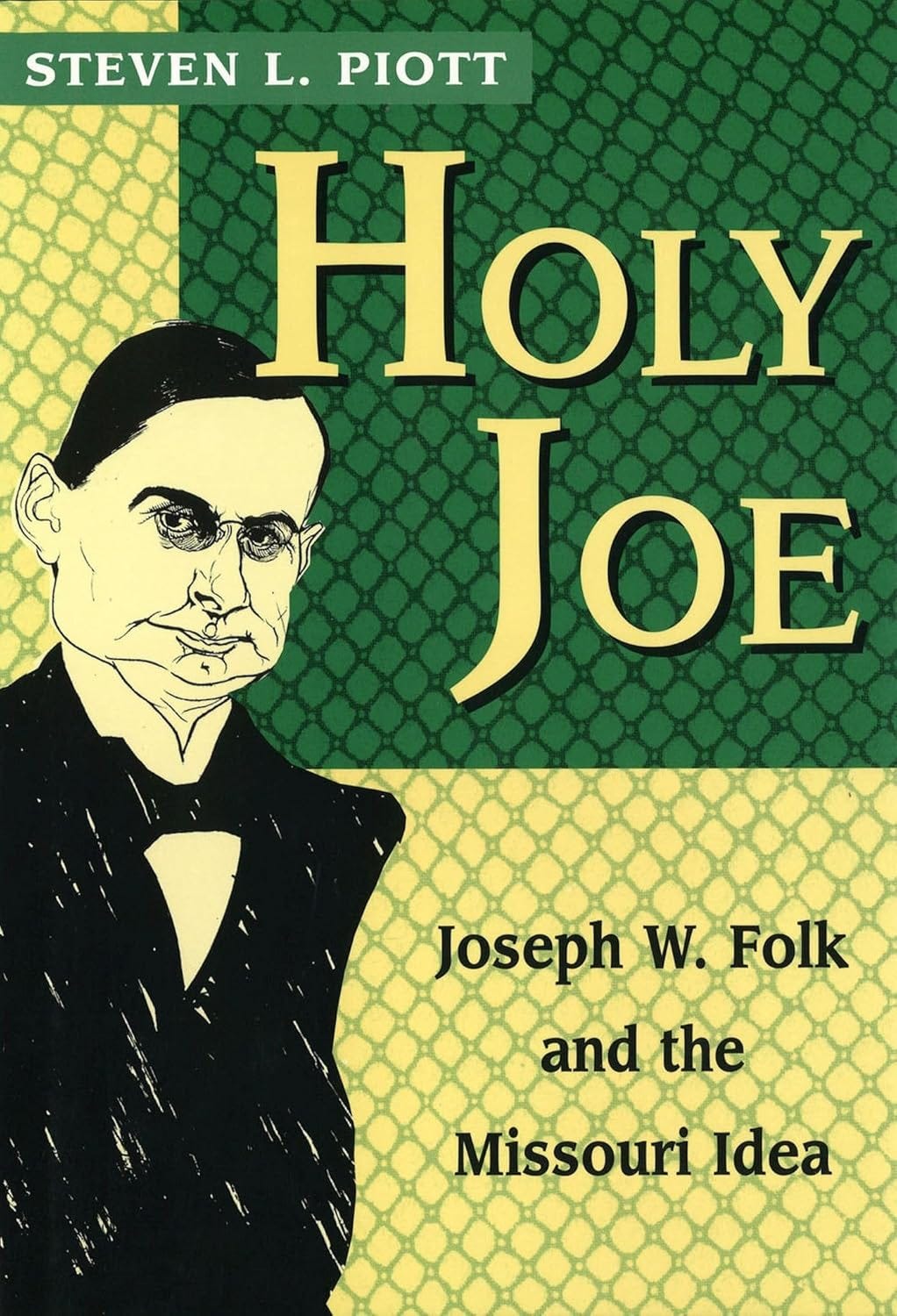
Butler had roving gangs that “created election day chaos by ‘moving the polls,’ assaulting voters, intimidating election judges, and voting often (‘repeating’) for their candidate.” A cabal of local business interests paid bribes for government contracts.
It’s no wonder that Folk became a local and national hero for standing up and saying “bribery is no ordinary felony, but treason.” His was a politics of morality; he saw corruption as the worst of all vices.
I’ll write more about corruption in the future, both in the Progressive Era and now. But suffice it to say: corruption mattered above and beyond its narrow budget impacts.
What machines were actually for
Though I think he underrates the importance of corruption, Teaford is a great representative of a broader neorevisionist school of history that is trying to resurrect the virtues of the Machine Politics era.
What lessons does this hold for state capacity debates today? Especially at the local level.
A useful framework here is Robert Merton’s famous distinction between the “manifest” and “latent” functions of political machines.
To attempt to de-jargon this, the idea is that a political system does some things intentionally and others unintentionally. The intended effects are easy to see. Merton’s contribution was rendering the unintended ones more visible.
In the case of political machines, they had the direct and observable effect of enriching their party members via corruption. But it’s hard to enrich your members if the government isn’t accomplishing anything! So they had to cut through red tape and get things done. This was their “latent function.”
Here’s Merton in his own words:
Whatever its specific historical origins, the political machine persists as an apparatus for satisfying otherwise unfulfilled needs of diverse groups in the population.
…
This dispersion of power is found not only at the national level but in local areas as well. “As a consequence,” Sait goes on to observe, “when the people or particular groups among them demand positive action, no one had adequate authority to act. The machine provided the antidote.”
To return to Teaford, it’s not as if machine bosses acted unilaterally. They were responding to the demands of their members and negotiating with civil servants, aldermen, and mayors. But, often with unsavory methods, they served as “brokers” who could eventually get something done after that complicated negotiation. And, of course, they took a cut.
What we’ve lost
Before I discuss what’s gone wrong, a quick caveat. The baseline of what we expect cities to do today is much higher than it was in 1870. The public gives you a lot more credit for paving the first roads than for maintaining the thousands of miles of roads that are already paved. I discussed this here as the Diminishing Returns Problem, and I think the Solow model of economic growth’s distinction between building and maintaining physical capital applies here too:
Back to Teaford. Part of the reason that scholars like him appreciate political machines is that they emerged and addressed those “unfulfilled needs” of the public. At the same time, they integrated low income people and immigrants into the political process and thus helped democratize the country.
If you take that kind of participatory, functioning government as a given, the corruption feels most salient. But in an era where government struggles to accomplish things, the effectiveness of these local governments stands out much more.
To put it in Merton’s terms, with distance we can better appreciate the latent functions of political machines and separate them from their manifest corruption.
When we compare today to Teaford’s era, we’re missing most of the pieces of the puzzle that helped those cities accomplish great things.
For one, we lack the same kind of robust political parties that connected everyday people to politics in a way that mattered for their day-to-day lives. I wrote about this more here; the hollowing out of political parties has resulted in worse candidates for big elections and a much more disconnected and distrusting public:

Even though these old, robust parties were often corrupt, it’s hard not to feel nostalgic for the role they served in engaging the everyday person and making sure they benefited from the political process.
Similarly, what happened to the reform organizations? Municipal research bureaus, for example, which were essentially locally-focused think tanks. What about civic leagues and good government clubs? Local journalism, greatly thinned out today, helped shine the spotlight on bad government to give more momentum to the reformers.
The ranks of civic-minded business elites have also thinned, the very people who ran these clubs and often served as mayors. Aaron Renn wrote insightfully about this in a piece titled “How American Cities Lost Their Movers and Shakers.”

In short, businesses have consolidated and become more focused on the national or global level. Gone are the kind of “downtown banker” types that filled mayors’ offices.
Democracy is messy – need it be corrupt?
The dichotomy between corrupt machines and virtuous reformers is far too simple. There were deep collaborations between all of the factions above, none of whom had enough power to run the table.
Teaford helps burst dichotomies, both of machine versus reform and the public versus experts. On the ground, American politics was as messy as ever. As I observed with the environmental movement, the best results often arise when we foster pluralism, letting strongly-opinionated factions duke it out over hard questions. But then we need to let someone move forward after brokering a final compromise.
Though this power-sharing left no one group completely satisfied, perhaps this is the dream scenario. As they say, that’s the sign of a good compromise.
A hybrid of machine and reform is what got things done. It combined the people’s material self-interest, channeled through political parties, with the high aspirations, idealism and technical expertise of elites.
I plan to explore this in a future piece, but a lingering question for me: how much can we separate the latent and manifest functions of political machines? Was corruption necessary to grease the wheels of government? Can we get this era’s virtues without its vices?